[Ad] Learn about what enmeshed parenting looks like, how it impacts children and families, and how to heal from enmeshment.
This article was developed via a partnership with BetterHelp.
What is Enmeshed Parenting?

Enmeshed parenting, also known as codependency, is when there is a lack of boundaries between parent and child (which may sometimes even tip over into emotional incest1).
It can look like over-protective parenting, a parent that relies on their child for emotional support, a parent that has no boundaries or is constantly inebriated, and the inability to let a child be independent. It can be overprotective or irresponsible.
You may be an enmeshed parent if you:
- Feel that it is best to protect your child at all costs
- Believe that you are the only person that should have a say in their actions
- Rely on your child for your own emotional support and wellbeing
Mindful parenting is the opposite of this, and it allows children the ability to be their own person while still creating a secure attachment with the child.
7 Ways Enmeshment Affects Your Family and Children

Here are seven ways this can affect your child and your family in the long run.
1. Children Will Start To Rebel
As children in an enmeshed household grow up, they will start to rebel against the pressures from their parents, which can cause parents to try to hold on tighter and restrict the child even more. This dynamic is extremely unhealthy for both parents and children.
The child may start to act out by:
- Taking drugs
- Drinking alcohol
- Going out late
- Sneaking out
- Deliberately breaking rules
So, why do they do this?
It’s because they are not given the normal rights that other children are getting. They feel that they are being smothered by their parent, and the only way to truly feel ‘free’ from this is for them to do the complete opposite of what the parent wants.
Instead of blaming your child, try to see things through their eyes.
This behaviour does not mean that your child is a ‘bad kid’ or is trying to hurt you. It means that your child does not feel respected, heard, or independent.
To remedy this, it may be beneficial to seek a family therapist that has experience in attachment problems and trauma dynamics.
Instead of blaming your child, try to see things through their eyes. Although you are the parent, you do not own your child, and they do need some amount of independence to become a functional adult.
If you want to learn more about family trauma and dynamics, you can also check out BetterHelp’s advice column here: https://www.betterhelp.com/advice/family/.
2. Children May Develop an Avoidant Attachment Disorder
Outside of children lashing out by doing things that you don’t like, they may develop attachment problems or an attachment disorder2 as an adult. Attachment problems mean that they will struggle with forming meaningful relationships in a healthy way.

Children who have a parent who is over-attached and ‘too close’ to them will often develop an avoidant attachment style. Avoidant attachment means that your child will struggle with:
- Falling in love
- Talking about feelings with their partners / friends / family
- Being vulnerable
- Being honest with themselves and others
- Going to therapy or seeking help
- Staying put when uncomfortable or scared
- Respecting or being kind to people who are emotionally intense or desire closeness
- Commitment to long-term relationships
- Giving hugs or being physically close to most people
- Healing trauma
- Not using humour as a coping skill
- Not avoiding difficult topics
- Being present
- Staying in a job
- Making efforts to grow emotionally
- Listening to someone else about what they should do
- Not being defensive or cold to those they love
Avoidant adults tend to cut people out of their lives.
There are many issues that can arise for a child who struggles with avoidance. Not only will they feel anxious around any romantic partners, friends, or family members throughout their lives, but they will also feel an inability to truly have security or emotional closeness.
They may even believe that they do not want or need this. However, this is untrue, as emotional closeness and vulnerability are important elements of not becoming narcissistic and cold.
When a parent is too close or has an anxious or disorganised attachment style, it almost always creates some amount of avoidance in children. Remember, children become adults, and avoidant adults tend to cut people out of their lives.
3. It Can Be Traumatic for the Children
Not only is enmeshment unhealthy, but it can be extremely traumatic.
This dynamic can be emotionally abusive.
If enmeshment is taken to an extreme, children will feel that they are 100% responsible for their parent’s behaviour and emotions.
They may have to parent their own parent or their siblings. They may have too much responsibility from a young age and may blame themselves for their parent’s behaviour. They may even feel as an adult that they are responsible financially and emotionally for their parent.
In some cases, this dynamic can be emotionally abusive.
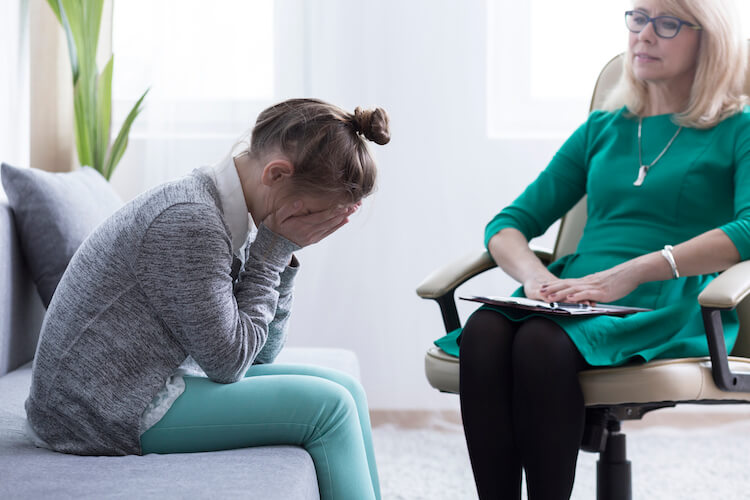
A parent can still hurt a child and cause trauma by controlling every aspect of their life.
If we look at this on an extreme scale, we can see parents with Munchausen’s by proxy3, which is a condition where the parent believes and acts like their child is sick when they are not.
They may even physically abuse the child by causing them medical distress, putting them in a wheelchair, or harming them with medications to make them appear sick. These behaviours are 100% carried out to control the child and make them dependent on the parent.
On a less severe scale, a parent can still hurt a child and cause trauma by controlling every aspect of their life. Here are some examples:
- Mary
Mary homeschools her child so that her child doesn’t learn anything from anyone else.
When Mary is upset, she makes her child take care of her.
She forces her child to always finish her meals, controls the outfits she wears each day, controls who can come over and forces her child to wake up very early to clean.
When Mary is upset, she makes her child take care of her. She often gets drunk, and her child is forced to clean up after her and lead her to bed.
Her child is unable to focus because she is constantly being worked to her limit and does not have enough sleep.
- Don
Don refuses to let his 18 year old child leave home, and she believes that she cannot.
When she wants to date a girl, he locks her in her room and won’t let her leave, telling her she is unnatural.
He says she is too young to date and has to help him with everything in his life because her mother left home.
- Samantha and John
Samantha and John have two children.
The youngest child feels smothered.
They expect too much from their youngest child, calling her ‘gifted’ and putting her in many programmes. They ignore their other child and always pit the children against each other, comparing them to each other.
The youngest child feels smothered, and the oldest child feels unloved and disrespected.
This dynamic causes the two children to hate each other as well.
4. Children Won’t Be Exposed to Life Lessons
There is a lot to be learned from natural struggle and sickness in life. Children with a secure family can still experience problems, such as loss of friends, breakups, sickness, and accidents.
Many children learn from these natural occurrences, and as adults, they have stories of when these things happened and how they taught them something.
If you are enmeshed with your child or do not give them a chance to be on their own, the only things they learn from life are what you teach them. They may become sheltered.

As a response, many of these children will make their own problems by getting into dangerous situations.
5. Your Child Can Become Sick, Mentally and Physically
If you are enmeshed with your child and do not expose them to enough other people, the outside world, or knowledge about their body, they can become sick.
A child can start to become depressed.
Not only does emotional trauma cause physical sickness but being sheltered for a long time can cause children to pick up sickness more easily from others since their immune system is not as good.
In extreme cases, if a child is not getting enough sleep, is not given any mental health care, or does not have a healthy social life, they can become extremely sick, tired, and start to become depressed.
6. Your Child Will Not Learn Boundaries
Children look to their parents to know how to act around other people. It’s important to note that not having any boundaries with your child, or having too many boundaries, can cause a child to not learn what healthy boundaries look like.
Relationship conflicts may occur.
These children may grow up to be adults who let others take advantage of them.
They can get into physically or emotionally abusive relationships. In some cases, these children may become abusive themselves. They may not know how to say no when their partner requests something of them that they don’t want to do.
Often, children who grow up to have an avoidant attachment problem will become attracted to and date people who have an anxious attachment style and want to be close all the time.
This pattern may cause them to feel smothered in relationships.
When this happens, the person is triggered by their past again, and relationship conflicts can start to occur.
Instead of communicating how they feel, they will lash out or ignore the person that is causing them fear. This pattern can cause them to feel smothered in relationships and can cause their partner to feel unloved and disrespected.
7. You May Lose Your Child
Although many children who have this type of dynamic with their parents feel a mental obligation to take care of their parents throughout life, this causes extreme emotional distress.
They may struggle to feel love towards you.
For those who do go through healing processes and talk to therapists about their trauma, this can end up with the child cutting the parent out of their life entirely.

When you can’t see your child as a unique individual who will someday be an adult, you are ensuring that you are not building a deep or healthy bond based on mutual respect.
When your child is an adult, they won’t have that important connection with you that makes them want you around. They may struggle with feeling loved or even feeling love towards you.
Can Children Who Were Parented By Enmeshed Parents Heal?
Healing is always possible for anyone.
The best way to heal trauma, anxiety, or attachment issues from an enmeshed parent is by going to therapy, committing to talking about your feelings and learning new techniques to open up. Secure attachment is the end goal.
You may benefit from therapy.
With a secure attachment, you’ll be able to:
- Talk about your feelings
- Say no when you need to
- Keep meaningful people in your life
- End relationships with unhealthy people
- Commit to jobs and schoolwork
- Be present when you’re able to and take space when you can’t
- Communicate when you need space
- Respect people who are more emotionally open
Both online and in-person therapy for trauma and attachment disorders can be a valuable tool for you as you grow through these issues.
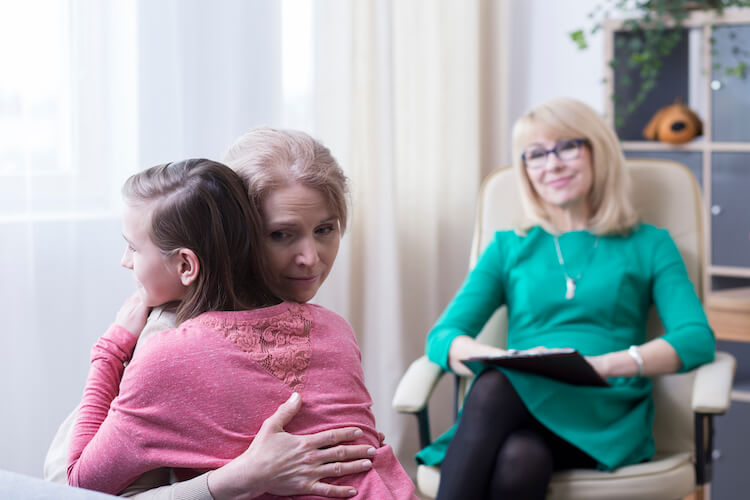
If you are a parent that is working to become un-enmeshed with your child, you may also benefit from therapy. It’s important to note that your desire to be very close to and control your child is likely due to your own attachment style, which may be disorganised or anxious.
Read up about attachment styles, trauma, and inner child healing to learn how to strike a balance between protectiveness and freedom for yourself and your children.
Although it is hard to change an attachment style when you’re an adult, it’s definitely achievable with the right support.
Sources
- Çimşir, E., & Akdoğan, R. (2021). Childhood Emotional Incest Scale (CEIS): Development, validation, cross-validation, and reliability. Journal of Counseling Psychology, 68(1), 98–111. DOI: 10.1037/cou0000439.
- Zeanah CH, Gleason MM. Annual research review: Attachment disorders in early childhood–clinical presentation, causes, correlates, and treatment. J Child Psychol Psychiatry. 2015 Mar;56(3):207-22. DOI: 10.1111/jcpp.12347. Epub 2014 Oct 31. PMID: 25359236; PMCID: PMC4342270.
- Zylstra RG, Miller KE, Stephens WE. Munchausen Syndrome by Proxy: A Clinical Vignette. Prim Care Companion J Clin Psychiatry. 2000 Apr;2(2):42-44. DOI: 10.4088/pcc.v02n0202. PMID: 15014581; PMCID: PMC181203.